Belphegor's Prime and Harvey Dubner

For Halloween this year we released two videos about Belphegor’s Prime (on Numberphile).

If you’ve only seen part one, then part two is also well worth a look.

You may notice (in part one) that Tony Padilla makes mention of a “prime hunter” called Harvey Dubner.

Prior to publishing, I sent an email to Harvey because I wanted to include a picture of him in the video.

I received a reply… but unfortunately it arrived just after publication. The message came from Harvey’s son, Bob.

In a lovely email, Bob explained his father is now 90 years old.

He explained Harvey is in “pretty good” health, although suffering some memory problems and no longer does mathematics.

Bob, who was also instrumental in the prime number work, explained:

“I am, indeed, the designer of the “massive computer” we “built in the garage” – it actually was a series of software packages and special arithmetic hardware that I designed over the years between about 1981 and 2000.  They mostly sat next to the couch in the family room; Dad liked to have the TV on when he did mathematical research.

It was around the year 2000, when FFT routines  running on 400MHz and faster PCs overtook the hardware I had designed, that we gave up trying to improve my hardware.  By the year 2005, I had incorporated the GMP software package and the magically tweaked routines written by George Woltman (of the GIMPS project) into our software.  (I’m a pretty good programmer, but some of the people on the GMP project and Mr. Woltman are magicians.  And my long-time engineering motto has been, “We steal only the finest.”) 

We had a great run with the stuff I built; I believe that at our personal peak we had found about three-quarters of all the known prime numbers with more than 1,000 digits.  But by the early 2000s, not only were general-purpose computers faster than my hardware (which ten years earlier had given us supercomputer capability) but also lots of people started using publicly available software to search for big primes, purely for bragging rights.  So my father switched to looking for numbers he found interesting.  Many packages are optimized around calculating the primality of number of the form k * 2^N.  When k is one, you have the Mersenne primes, of course; but the calculations can run fast even for other values of k.  But my hardware and software was general purpose, so he looked for numbers that were interesting in base 10 – for example, the palindromic primes, of which the Belphegor Primes are a subset.  That was just for fun; he did a bunch of serious work in Sophie Germain Primes and Carmichael numbers.  But it was always fun searching for big primes of various kinds.”

Bob included a picture of Harvey, adding:

“He remembers that he used to do a lot of math, but he can’t remember the math at all.

He likes being reminded about it, though, and so I happily send along this picture, which I shot about a year ago.

Coincidentally, a friend just today pointed me at https://youtu.be/zk_Q9y_LNzg, which is, I believe, the episode in question, so I am probably too late with the picture.  But I figured I’d send it along anyway.

Thanks so much for your interest.  If you decide to edit in my dad’s picture, please let me know.  It would make him happy to see his image mentioned along with his work that way.”

So here’s the picture of Harvey - our thanks to him and to Bob.

harver_dubner.JPG

Movies vs Books

The latest Numberphile video deals with the perennial question - does Hollywood ruin a book when they make it into a movie?

Hannah Fry takes a statistical look at the issue.

In the video we created a plot made with data compiled by Walter Hickey.

plot.jpg

If you'd like to download a high resolution version so you dig down and see all the names, CLICK HERE (apologies for the overlapping... it was generated automatically for the video).

The extended interview with Hannah in the booth recording her audio book is on Numberphile 2.

And if you fancy the audio book, we encourage you to consider our show sponsor Audible.

Their 30-day trial includes a free audio book - and you could make it Hello World by Hannah Fry.

Visit https://www.audible.com/numberphile or text numberphile to 500 500.

More Hannah books are here.

10 years of Periodic Videos

Today marks the 10th anniversary of our first upload to Periodic Videos.

To mark the occasion, we've released a special film in which Professor Martyn Poliakoff discusses his 10 "favourite videos".

You can watch it here, or watch a YouTube playlist of the 10 videos he selected.

To accompany the professor's selection, I've also chosen 10 of my favourites.

You can watch my selection here, or again a playlist of the videos in their entirety.

We have also released a special enamel pin to mark our anniversary. You can pre-order the pin here.

Our thanks to everyone who has watched and supported our project over the past 10 years.

It has been so much fun and we can't wait to make more.

teampic.jpg
Screen Shot 2018-06-24 at 13.50.32.jpg

Squaring the Circle - The Documents

This week we posted an Objectivity video featuring Dr James Grime visiting the Royal Society.

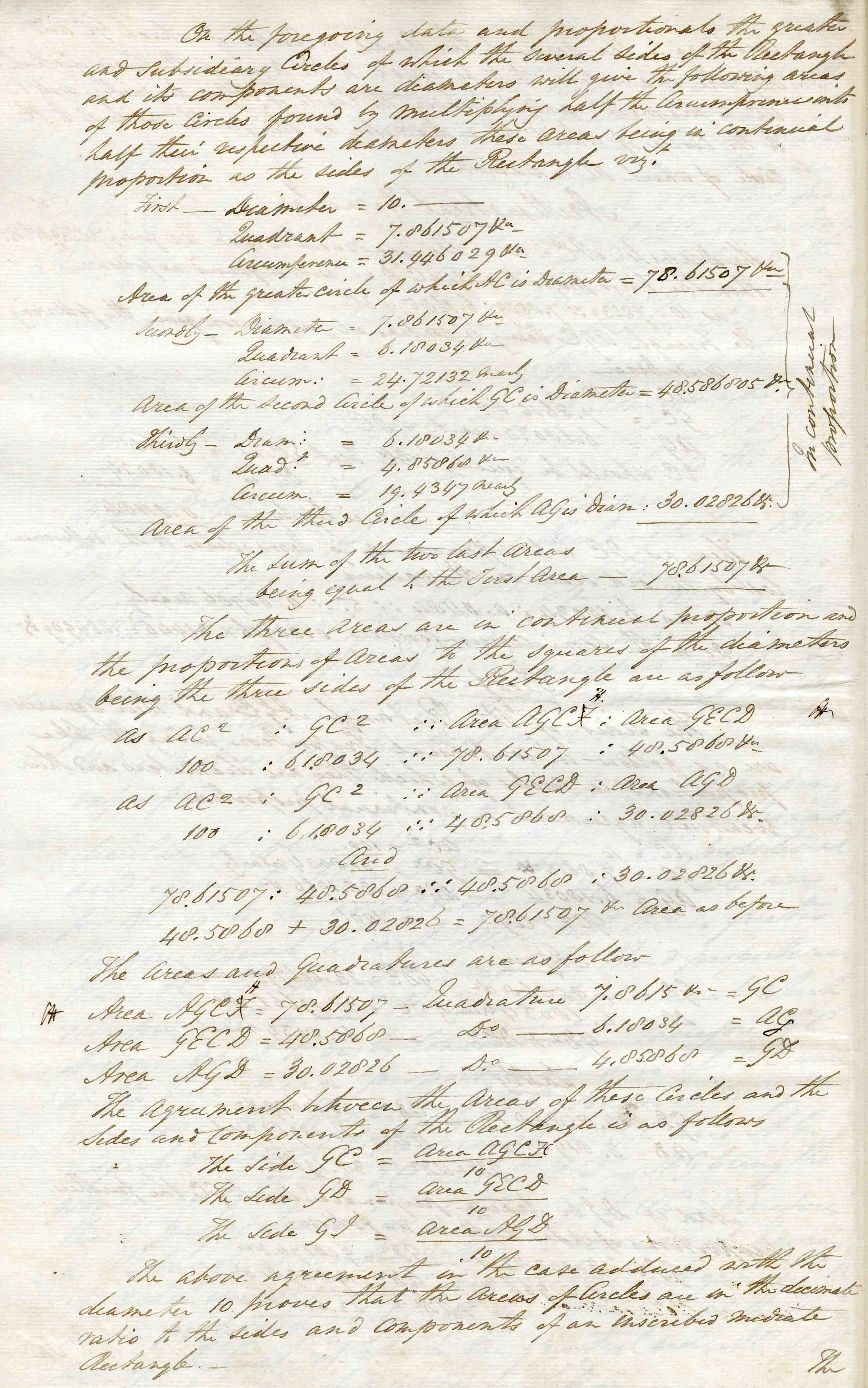
Head librarian Keith Moore showed James an intriguing object - an ornamental piece purporting to prove that a circle can indeed be squared.

Sent by a chap named Charles Hudson, based in Calcutta, it was said to show "the solution and demonstration of the quadrature of the circle".

At the time of filming, we did not have the object's accompanying documents.

But, by popular demand, Keith has dug up some correspondence and made it available to us.

You can download it as a PDF here, or see the photo gallery below.

But you may have to transcribe the handwriting yourself. We can't do everything for you.

And of course, as James himself told us on Numberphile, the whole endeavour was later proven to be impossible.

A Vintage Computer Game

Periodic Videos and Computerphile have joined forces to tell the story of a vintage computer game.

Scroll down for links to the PLAY ALL THE GAMES.

In the first video, Professor Sir Martyn Poliakoff explains how he commissioned students to make the compilation of chemistry-themed games in the 1980s.

With help from Dr Steve Bagley and a vintage computer, Sir Martyn also tries to play one of them.

In a second video on Computerphile, Dr Bagely discusses with Sean Riley how old software can be revived and run on emulators.

Dr Bagely has also put both sides of the disk on an emulator so you can play the games too.

SIDE ONE
SIDE TWO


Our thanks to Matt Godbolt for helping with the emulator.

Note that information in the game, such as the periodic table and university course info, is somewhat out of date. It was the 1980s!

You can also download the software itelf from Dr Bagley's Github here.

And here is a PDF of the game instructions.